Quick Takeaways
- Focus improves fastest when you fix your study environment, plan your next step, and use active recall.
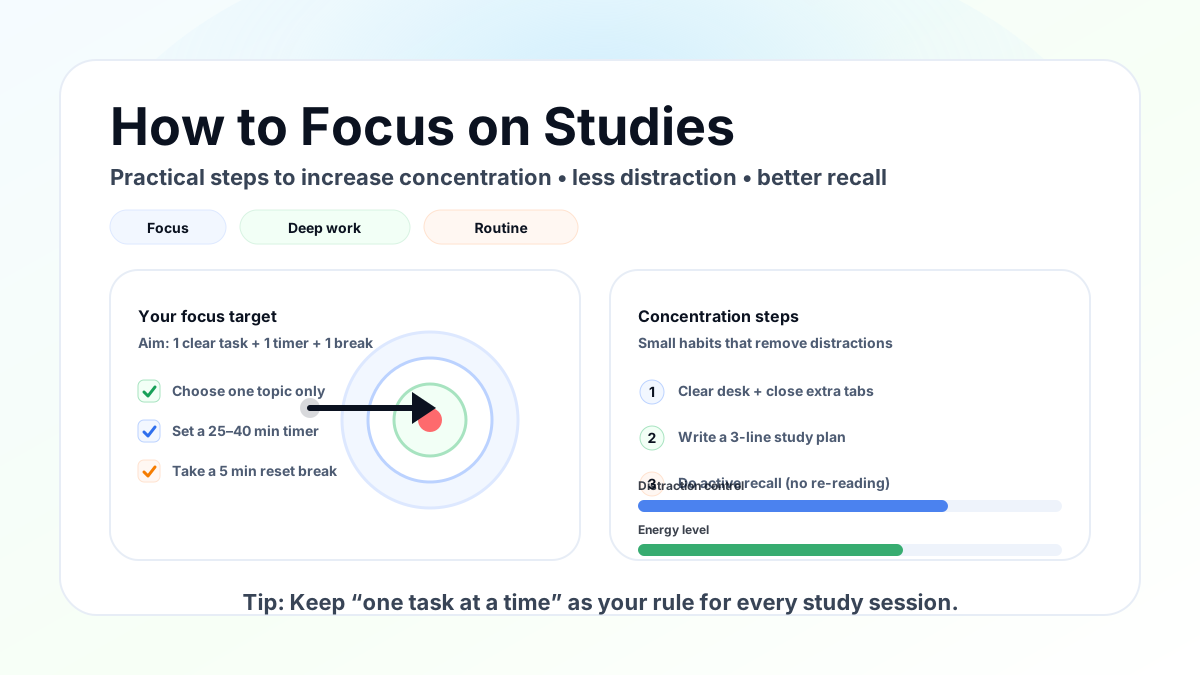
- Short study blocks (25–40 minutes) beat long sessions without breaks.
- Most lack of concentration comes from friction: phone, unclear goals, poor energy, and stress.
- Track one metric (blocks completed) and improve week by week.
If you are searching for how to focus on studies, it usually means you can start studying, but you struggle to stay consistent. You may read the same page many times, lose attention, or keep checking your phone.
This guide gives you a simple system to increase focus and concentration while studying. You will learn practical focus techniques, quick fixes for lack of concentration, and a daily routine you can follow for school, college, or exams.
Why focusing feels hard (and why it’s normal)
Concentration is not a personality trait. It is a skill. Most students struggle because the brain prefers easy rewards over long tasks.
Too many distractions: phone notifications, tabs, noise, messaging
Unclear next action: you open the book but don’t know what to do first
Long sessions without breaks: mental fatigue makes your mind wander
Stress and overthinking: worry takes attention away from the topic
Low energy: poor sleep, dehydration, heavy meals, or no movement
Key idea: The goal is not ‘perfect focus’. The goal is to return focus fast whenever you notice distraction.
The 3-part focus system: Environment → Plan → Technique
If you fix only one part, focus still breaks. Fix all three and you’ll feel the difference quickly.
- Environment (remove friction)
Use the two-item rule: only one book + one notebook on the table.
Keep the phone away (another room is best).
Prepare water, pen, and required materials before you start.
Sit facing a wall if possible to reduce visual distractions.
Use a timer and headphones (optional) for consistent study blocks.
- Plan (make the next 30 minutes clear)
Choose one topic only for the next block (example: ‘Photosynthesis – 15 questions’).
Define output: notes, solved problems, flashcards, or a short summary.
Decide the time: 25/5 or 40/10 (study/break).
Write the first step on paper: ‘Start with question 1’ or ‘Read page 12–14’.
- Technique (study in a way that holds attention)
Use active recall: close the book and write what you remember.
Prefer practice questions over rereading.
Mix micro-tasks: read 10 min → recall 5 min → practice 10 min.
Use teach-back: explain the concept in simple words.
Daily routine: how to study with full concentration
Follow this routine exactly for one week. After that, adjust timing based on your energy.
2-minute reset: drink water + 5 slow breaths + clean the desk.
Write one goal: ‘Finish 15 problems’ or ‘Make 1-page notes’.
Set a timer for 25–40 minutes. Start immediately (no planning inside the timer).
When distracted, use the focus anchor: ask ‘What is the next step?’ and do only that step.
Take a short break: stand up, stretch, walk 1–2 minutes (avoid scrolling).
Repeat 2–4 blocks depending on available time.
Focus anchor example: If you catch yourself distracted, say: ‘Next step is question 3’. Open question 3 and start.
Mind concentration exercises (10 minutes per day)
These mind concentration exercises train attention like a muscle. Do them before studying or between blocks.
10-breath count (2 minutes): count 1–10; if you forget, restart calmly.
Dot focus (60 seconds): stare at a dot; return attention when thoughts come.
Reverse spelling (2 minutes): choose two easy words and spell backwards.
Silent reading challenge (2 minutes): read without switching tasks.
3-minute recall writing (3 minutes): write key points from your last session.
Tip: If lack of concentration is severe, start with 5 minutes daily and increase slowly.
Focus techniques that work fast
Use these when you feel lazy, distracted, or overwhelmed.
Technique 1: The 5-minute start (beats procrastination)
Tell yourself: ‘I will study for only 5 minutes.’ Starting reduces resistance, and momentum often continues.
Technique 2: Active recall loop (focus + memory together)
Learn a small section (5–10 minutes).
Close the book and recall (2–3 minutes).
Check gaps (2 minutes).
Solve 3–5 questions (5–10 minutes).
Technique 3: Break design (avoid ‘breaks’ that steal attention)
Best breaks: water, stretching, short walk, deep breathing.
Avoid: short videos, social media, and endless messaging during breaks.
If you must use phone: set a 2-minute alarm and stop when it rings.
How to stay focused when studying with a phone nearby
Phones are the biggest reason students ask how to concentrate on studies. Use strict rules for study blocks.
Keep phone in another room if possible.
If not: put it face-down, silent, and 2 meters away.
Use ‘Do Not Disturb’ only during study blocks.
Check messages only after 2 blocks (in long break).
If studying online, use laptop; keep phone away.
7-day plan to increase concentration in studies
Use this plan to build consistency. Track blocks completed and the biggest distraction each day.
Day 1: Environment reset + 2 study blocks
Day 2: Add active recall in 1 block
Day 3: Add 10 minutes mind concentration exercises
Day 4: Increase to 3 blocks + better breaks
Day 5: Practice questions in every block
Day 6: Review weak areas using recall notes
Day 7: Mock test + plan next week
Tracking tip: Write: blocks completed, top distraction, one improvement for tomorrow.
Next Step
If you want a stronger routine for exams, combine this focus system with memory methods like active recall, spaced revision, and practice tests. Keep it simple: consistent study blocks + daily recall notes + weekly mock tests.
Frequently Asked Questions
How to focus on studies for long hours?
Use short blocks (25–40 minutes), planned breaks, and active recall. Long hours without breaks reduce concentration.
How to concentrate on studies without distractions?
Remove phone notifications, keep only one topic open, and use a timer. Clean the desk and follow the two-item rule.
How to increase concentration in studies quickly?
Start with a small goal, do 5–10 minutes of mind concentration exercises, and use the active recall loop.
What are the main causes of lack of concentration?
Common causes include phone habits, stress, poor sleep, unclear goals, multitasking, and low energy.
Do mind concentration exercises work?
Yes, if done daily. They train attention control so you can return focus faster when distracted.